For me the 90’s were defined by games consoles. I remember playing SuperMario on my cousin’s Nintendo 64 and Saturday’s were often spent desperately button bashing through the levels of Street Fighter hoping that maybe this time I would come out as the winner. Then the Nintendo 64 was traded in for a PlayStation and Tekken became a gaming staple in my family. Many weekends and summer holidays were spent gathered around the TV, taking it in turns to complete the Story Mode with as many characters as possible and usually this meant staying up into the early hours because the game had been rented from Blockbuster and you only had 48 hours to complete it!
Tekken was released in 1994 on PlayStation 1 and over the last 27 years has spanned seven iterations of the original game, two tag tournaments and several expansions across all the Playstation platforms. The most recent release was Tekken 7, released on PlayStation 4 in 2017. Now I won’t lie, I haven’t kept up to date on the newer releases, but when life has been particularly tricky and I am in need of some active escapism, I do find myself reaching for my PS2 controller, my copy of Tekken 4 and all the nostalgia that comes with it.
Tekken centres around The King Of Iron Fist Tournament, a fighting competition that sees fighters from around the world compete for the opportunity to win prize money and control of the Mishima Zaibatsu. The mysterious Mishima Zaibatsu is a highly coveted business conglomerate with seemingly limitless wealth, technology and henchman, and each character has their own motivations for competing in the tournament and winning the prize. You can follow the character’s journeys through the games’ story mode and many of the character’s individual stories overlap, leaving breadcrumbs that are scattered throughout subsequent games and story arcs. These are incredibly rewarding as a player and the cliffhangers are a massive incentive to stay loyal to the series and continue to buy the games.
The central plot follows the power struggles of the Mishima/Kazama family. From Tekken 1 we understand that father and son duo, Heihachi and Kazuya Mishima, are sworn enemies after Heihachi throws Kazuya into a volcano. It transpires that Kazuya carries the ‘Devil Gene’ which is an uncontrollable force that literally turns him into an unrelenting devil with supernatural powers. This Devil Gene has the power to destroy the world as we know it if not kept under control and this personal struggle is at the centre of Kazuya’s story and eventually his son, Jin Kazama’s, who must also battle with the same demonic powers. Alongside the supernatural and the volcano tossing, there are all the usual wealthy/powerful family problems that you would expect to see in any glossy HBO drama.
In fact, Tekken and RuPaul’s Drag Race actually have a lot in common in terms of their production trajectory. Like Seasons 1 and 2 of Drag Race, the first two Tekken games feel like the prototype, the graphics are harsh and at times a little scary but there are some good ideas. Tekken 3, like Season 3 of Drag Race is when the game seems to find its feet; we meet characters that go on to become staples of the series like Xiayou, Hwoarang, Eddy and Jin and multiple storylines are developed, like the Devil Gene and Mishima Zaibatsu legacy. Then like Season 4 of Drag Race, Tekken 4 elevates the storytelling creating a new Story Mode and the series format is set. Tekken 4 is the game I would recommend as a starting point to anyone who has never played before and wants a full sense of the Tekken experience with gorgeous graphics and nearly all of the key and original characters present.
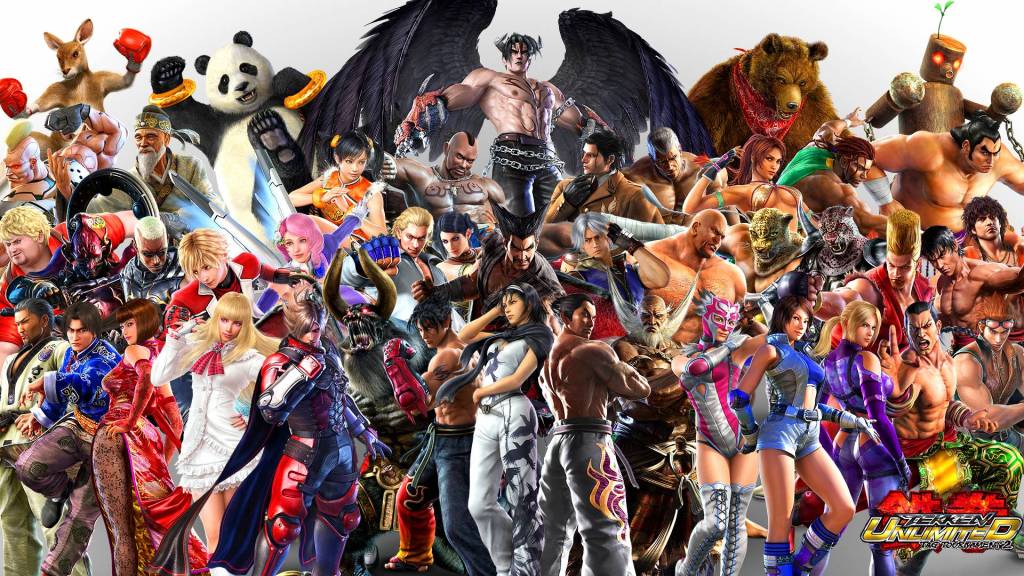
Unlocking each character’s individual story is what kept me coming back to play again and again and with a game that spans nearly thirty years and a story timeline that stretches over forty years I could easily spend several posts breaking down all the characters and story history of the game, so here are some of my favourite elements of Tekken:
The Openings
Each game starts with an opening movie kind of like a ‘Story So Far…’ moment. We get caught up on all the drama that has unfolded and new characters are introduced. The music is usually pumping, getting you geared up and ready to button bash your way to victory. The original Tekken opening shows several key characters, just… doing… stuff. There’s some half-hearted practice fighting and some aimless running in which stylish assassin, Nina Williams doesn’t even get any shoes. There is a motorbike and a cool, contemporary city landscape and the heady climax is Kazuya punching a candle out, which isn’t really that impressive.
Tekken 2 gives us a bit more story and a few more characters, but Nina is still dealt the short straw; this time with hair that literally looks like dried out hay that she sweeps ‘seductively’ across her face. It is not until Tekken 3 that we start to get the true movie trailer feel with immersive scenes, montages and sequences filling us in on what has happened between the games. Tekken 5 has the ultimate opening, an overview of what has happened since the events of Tekken 4 and then an upbeat, high energy montage of the game’s characters brought to life with stunning graphics and all the dramatic slow-mo you could wish for. I also have to give a shout out to Tekken Tag Tournament and Tekken Tag Tournament 2 for the most exhilarating opening music in the series.
The Commitment to Story
What I love about Tekken is how much it commits to the story. Your favourite characters are your favourites not just because they have a great combo or are easy to play with but because you’re invested in their story. Some characters are there for comic relief, lightly tapping into the central plot of the game and others don’t touch it at all, instead telling their own independent story and as a player, or an audience, we commit to following them through the series for several games. After Jun Kazama’s death between Tekken 3 and 4 (SPOILER! but also this game ins over twenty years old so…) Jun does not appear again as a playable character. We see her in flashbacks and her presence is felt in Jin’s struggle between light and dark but as a player she doesn’t exist. We don’t see her again until Tekken Tag Tournament 2 where a number of characters that have been absent from previous games, because of the narrative, return. We even get a vintage Heihachi sporting the same dark hair he had in Tekken 1 which is fun. When I spotted Jun in the opening of Tekken Tag Tournament 2, I literally gasped and when you see the reappearance of Angel and the impact that has on several of the game’s key characters there is a poignancy and emotional weight that isn’t necessarily expected when you’re loading up a fighting game but is felt as a result of the attention to detail in the storytelling.
The Icons
Panda
Despite all the seriousness, there is also a lot of silliness and high camp drama in the games. Panda is an icon! She is an accessory queen with her plastic bracelets, her handbag and sometimes even her hat and she is a dedicated best friend to Xiayou. I have to give a shoutout to Panda’s Tekken 4 ending that after a very late night of game playing actually brought me to tears. (I am convinced it was just because I was twelve and overtired!)
Anna and Nina
Anna and Nina are also fabulously camp icons. Effortlessly stylish, the feuding sisters are a staple from the very first game and their attempts to outwit and one up each other make for some brilliant sparring. The stakes also fluctuate from minor inconveniences and embarrassments like stealing a shoe to huge acts of international incident, like blowing up a film set! Can we also have a moment of silence for how rough they both look in Tekken 1!
Lee
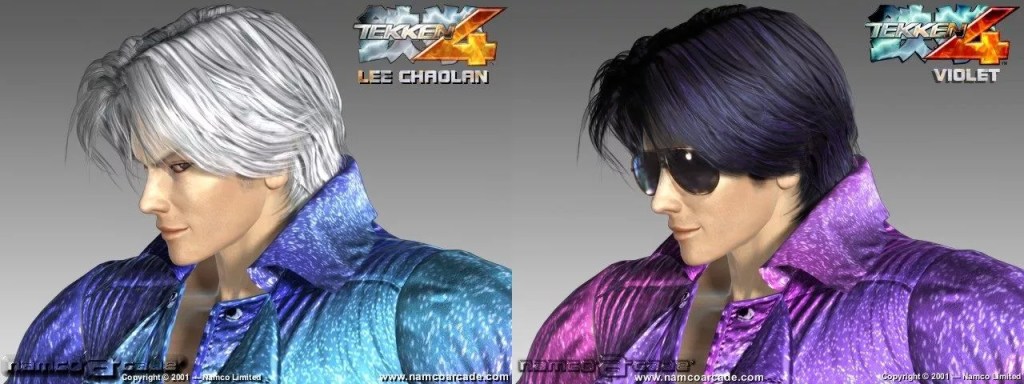
Son of Heihachi and half-brother of Kazuya, Lee is the black sheep of the Mishima family. A playfully queer icon, Lee enjoys a life of leisure and his main reason for entering the tournament, and winning the prize money and control of the Mishima Zaibatsu, is so he can continue enjoying the finer things in life and building his ultimate fighting robot, Combot. He even participates in the fourth Tekken tournament in disguise, as Violet, and coining the catchphrase, ‘Excellent’. In Lee’s world he is the hero, his endings are never canon but we are all living for his fantasy.
Tekken 4 and 5
Tekken 4
I couldn’t talk about Tekken without talking specifically about my two favourite games in the series, Tekken 4 and 5.
Tekken 4 critically was the most poorly received game in the franchise. It takes on a darker tone than previous games as the stories become more tangled and entrenched. Personally as someone who is in it for the drama rather than the gameplay this suited me fine but many die-hard gamers found the slower speed of gameplay disappointing and the way you moved around the stages irritating. Personally, I liked that you had free movement to do a little tour of the surroundings. There was one beach location where you could actually fight in the sea and it was a tradition in our house to call a truce while you walked out into the sea as far as you could and only then could you start fighting. The stages felt so realistic and the music instantly hits me with a huge wave of nostalgia. The airport stage has an almost cult following online for Tekken 4 fans but I love the beach, the mall and the final stadium the best.
Tekken 5
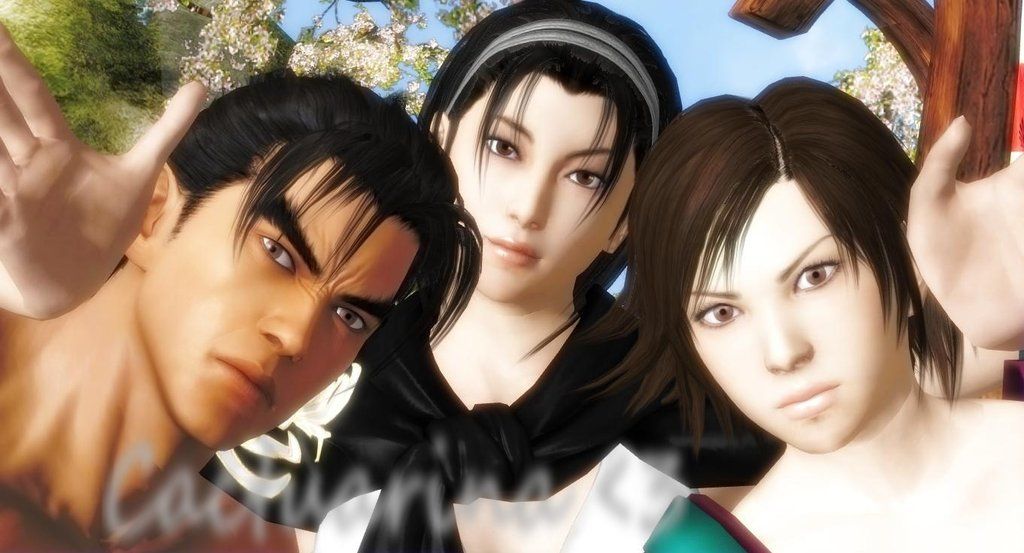
I can remember my hysteria when Tekken 5 came out, so much had been left up in the air at the end of Tekken 4 and I was desperate to follow those breadcrumbs and find out what was going to happen next. I felt like we had watched some of the younger characters grow up in the time between Tekken 4 and 5 and relationships and alliance felt more poignant than ever before. Tekken 5 is the heart of the series for me. I think it has the best game play, the best characterisation, the best of what Tekken 4 had to offer in terms of story and the best of competitive gameplay. We meet several new characters who quickly become integral to the Mishima/Kazama saga: Jinpachi, Heihachi’s father and Asuka, Jin’s cousin on his mother’s side. Practically, Asuka fills the Jun shaped hole in terms of playable characters and narratively she is a living connection between Jin and his mother’s family, the light in his demonic darkness. Tekken 5 was one of those games we played for eight hours straight. Released in 2005 on Playstation 2, we were hungry for the stories and when we had collected all the key components we were desperate to know what was going to happen next.
Like I said at the start of this post I haven’t spent much time playing the more recent iterations of the game. Tekken 6 was the first Tekken game released for Playstation 3 and with an emphasis on online gameplay a lot of the minor narrative threads from Tekken 5 got lost and new characters were introduced which pulled the game in a slightly different narrative direction. Saying that, I have spent several hours watching all the character endings for both Tekken 6 and 7 (but that is because I am invested as a loyal fan and have a massive YouTube obsession). The game that looks most like it will satisfy my storytelling cravings is Tekken Tag Tournament 2 and I think it will be one that I will definitely purchase with the intention of maybe dedicating a weekend to playing for nostalgia’s sake. It seems to hit the story buttons I want and from the clips I have seen it is the one game that has an almost complete cast of characters from Tekken 1 right up to Tekken 7.
Although I definitely don’t play video games regularly anymore, I love the ritual of gaming, of everyone cheering you on when you finally beat the boss, the gameplay superstitions like having a lucky controller, or sitting in one particular chair in the living room and the adrenalin when you only have a slither of life left in your health bar and all that matters in that moment is winning. Gaming can be total escapism and it can create stories that become like folklore between groups of friends or family. Some of my greatest childhood memories revolve around a Playstation and is there any better feeling than beating a self-proclaimed pro, even if it is just beginners luck?
 Midnight Culture